
Introduction
When you sell an asset like a house, plot, gold, or shares after holding it for a long time, you may earn a long-term capital gain. On paper, this gain may look very high. However, the full increase in value is not always real profit.
A part of the increase may happen only because of inflation. Over time, the value of money falls, and the price of assets usually rises. Therefore, the Income Tax law uses the concept of indexation in eligible cases.
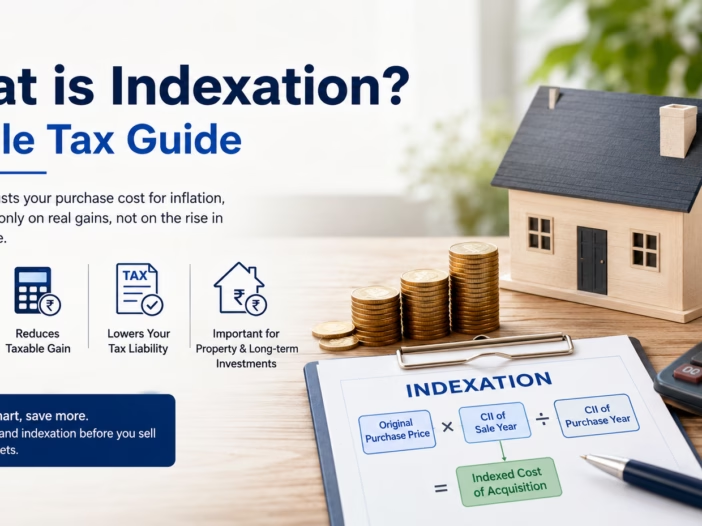
Indexation helps you adjust the original purchase cost of an asset according to inflation. As a result, you pay tax on a more realistic gain, not on an artificial gain created only by rising prices.
For property sellers in Greater Noida, Noida, and nearby areas, this concept becomes very important because many people hold flats, plots, houses, or commercial property for several years before selling them.
What is Indexation?
Indexation means increasing the original purchase cost of an asset by applying inflation adjustment.
In simple words, indexation says that money had more value in the past. Therefore, you should not directly compare an old purchase price with the current sale price.
For example, suppose you bought a plot many years ago for ₹20 lakh and sold it later for ₹80 lakh. At first, your profit looks like ₹60 lakh. However, due to inflation, ₹20 lakh of the past does not have the same value today.
So, indexation increases your purchase cost for tax calculation. This reduces the taxable capital gain in eligible cases.
Why is Indexation Important?
Indexation is important because it separates real profit from inflation-based profit.
Without indexation, your capital gain may look higher because the calculation ignores inflation. However, with indexation, your purchase cost increases on paper. As a result, your taxable gain may reduce.
This is especially useful in property transactions. In Greater Noida, many people buy flats, plots, or commercial spaces and sell them after a long period. During this period, the price may increase due to inflation, development, location growth, and market demand. Indexation helps calculate the gain more fairly wherever the law allows it.
How Indexation Works
Indexation works through the Cost Inflation Index, also called CII.
The government notifies a Cost Inflation Index number for each financial year. This number helps taxpayers adjust the purchase cost of an asset according to inflation.
The formula is:
Indexed Cost of Acquisition = Original Purchase Price × CII of Sale Year ÷ CII of Purchase Year
After calculating the indexed cost, you can calculate capital gain as follows:
Long-Term Capital Gain = Sale Value – Indexed Cost – Transfer Expenses
Transfer expenses may include brokerage, legal charges, documentation charges, or other direct expenses related to the sale.
Simple Example of Indexation
Let us understand this with a simple example.
Suppose you bought a property for ₹50 lakh and sold it later for ₹90 lakh.
Without indexation, your raw gain will be:
₹90 lakh – ₹50 lakh = ₹40 lakh
Now suppose indexation increases your purchase cost to ₹75 lakh.
In that case, your indexed capital gain will be:
₹90 lakh – ₹75 lakh = ₹15 lakh
So, instead of paying tax on ₹40 lakh, you may pay tax only on ₹15 lakh, subject to applicable tax rules.
This is why indexation can make a big difference in tax planning.
Latest Rules on Indexation
The rules for indexation have changed significantly. The government has moved toward a simpler capital gain tax system. As a result, the tax rate has reduced in many cases, but indexation benefit has also been removed or restricted for many assets.
Therefore, you should not apply indexation automatically. First, you should check the asset type, purchase date, sale date, residential status, and applicable tax rule.
Indexation on Immovable Property
Immovable property includes land, building, residential house, flat, plot, and commercial property.
For property sellers, the rule depends mainly on the date of purchase.
Property Bought Before 23 July 2024
If a resident individual or resident Hindu Undivided Family sells immovable property bought before 23 July 2024, they get a useful safety option.
They can compare both tax methods and choose the lower tax liability.
Option 1: Pay tax at 12.5% without indexation.
Option 2: Pay tax at 20% with indexation.
This option can help many property sellers, especially those who bought property long ago. In many old property cases, indexation may reduce the taxable gain significantly.
For example, if a person bought a plot in Greater Noida several years ago and now wants to sell it, the tax calculation should be done under both options wherever this benefit applies. After that, the seller can choose the option that gives a lower tax amount.
Property Bought on or After 23 July 2024
If a property is bought on or after 23 July 2024, indexation benefit is not available.
In such cases, long-term capital gain on property is generally taxed at 12.5% without indexation, subject to applicable conditions.
This means the taxpayer calculates gain by taking the actual sale value and actual purchase cost, without increasing the purchase cost through CII.
Holding Period for Property
For land and building, the asset generally becomes long-term if the owner holds it for more than 24 months.
If the owner sells it before completing the required holding period, the gain may become short-term capital gain. In that case, indexation does not apply.
Therefore, before selling any property, you should first check the holding period.
Indexation on Gold, Jewellery, and Other Physical Assets
For assets such as gold, jewellery, and many other physical assets, the indexation benefit has been removed under the current capital gain framework.
Long-term gains on these assets are generally taxed at 12.5% without indexation, subject to applicable rules.
This means the taxpayer usually pays tax on the difference between sale price and purchase price, without adjusting the purchase cost for inflation.
Indexation on Unlisted Shares
Indexation benefit is also not available for unlisted shares under the current framework.
If unlisted shares qualify as long-term capital assets, the long-term capital gain is generally taxed at 12.5% without indexation, subject to applicable provisions.
Therefore, investors should calculate tax carefully before selling unlisted shares.
Indexation on Listed Shares and Equity Mutual Funds
Listed equity shares and equity-oriented mutual funds have a separate capital gain tax structure.
Indexation does not apply to these assets.
Long-term capital gain on listed equity shares and equity-oriented mutual funds is generally taxed at 12.5% on gains above the annual exemption limit of ₹1.25 lakh, subject to applicable conditions.
For listed equity shares and equity mutual funds, the holding period for long-term capital gain is generally more than 12 months.
Summary of Current Capital Gain Treatment
| Asset Type | Holding Period for Long-Term | Current Tax Treatment |
|---|---|---|
| Real estate bought before 23 July 2024 | More than 24 months | Option to compare 12.5% without indexation or 20% with indexation for eligible resident individuals and HUFs |
| Real estate bought on or after 23 July 2024 | More than 24 months | 12.5% without indexation |
| Gold, jewellery, and many physical assets | More than 24 months | 12.5% without indexation |
| Unlisted shares | Generally more than 24 months | 12.5% without indexation |
| Listed equity shares and equity mutual funds | More than 12 months | 12.5% on gains above ₹1.25 lakh |
Indexation on Cost of Improvement
In eligible property cases, indexation may also apply to the cost of improvement.
For example, suppose you purchased a house and later spent money on major construction, additional floor construction, or structural improvement. If the improvement qualifies under income tax rules and you have proper proof, you may add it to the cost while calculating capital gain.
However, normal repairs usually do not qualify as cost of improvement.
Therefore, you should maintain proper bills, bank payment proof, contractor details, and other supporting documents.
Documents Required for Indexation Calculation
To calculate indexation and capital gain correctly, you should keep all property and payment documents ready.
Important documents include purchase deed, sale deed, allotment letter, builder-buyer agreement, payment receipts, bank statements, improvement bills, valuation report if required, brokerage bill, and legal expense proof.
For Greater Noida property cases, documents such as GNIDA allotment letter, builder payment receipts, possession letter, registry deed, lease deed, transfer papers, and mutation records can be very useful.
Common Mistakes While Calculating Indexation
Many taxpayers make mistakes while calculating capital gain. These mistakes may increase tax liability or create problems during income tax scrutiny.
Common mistakes include using the wrong purchase year, applying indexation where it is not allowed, ignoring improvement cost, not deducting transfer expenses, using rough market value without proof, missing the 23 July 2024 rule for property, and choosing the wrong ITR form.
Therefore, you should calculate capital gain carefully before filing your income tax return.
Why Should Property Sellers Plan Before Sale?
Property sale usually involves a large amount of money. Therefore, even a small mistake in capital gain calculation can create a big tax difference.
Before selling property in Greater Noida or nearby areas, you should calculate expected capital gain, check whether indexation applies, compare available tax options, plan exemption under eligible sections, and keep all documents ready.
This planning helps you avoid last-minute tax pressure and future income tax notices.
How Can a CA Help?
A Chartered Accountant can help you calculate capital gain correctly. A CA can also check whether indexation applies, compare tax under different methods, calculate exemption, prepare documents, and file the correct ITR.
This becomes more important in cases of inherited property, jointly owned property, old plots, builder flats, under-construction property, property sold below stamp duty value, and NRI property sale.
Conclusion
Indexation is a simple but powerful tax concept. It adjusts the purchase cost of an asset according to inflation and helps calculate a fair capital gain in eligible cases.
However, indexation is no longer available for every asset. The current capital gain framework gives limited indexation benefit mainly in specific immovable property cases. Therefore, taxpayers should not apply indexation blindly.
If you are planning to sell a flat, plot, house, or commercial property in Greater Noida, you should calculate capital gain before completing the transaction. Proper tax planning can reduce tax, prevent mistakes, and give you peace of mind.
FAQs
1. What is indexation in income tax?
Indexation means adjusting the purchase cost of an asset according to inflation. It helps calculate a more realistic capital gain in eligible cases.
2. Why does indexation matter?
Indexation matters because it prevents taxpayers from paying tax on inflation-based gains where the law allows indexation.
3. What is Cost Inflation Index?
Cost Inflation Index, or CII, is a number notified by the government for each financial year. It helps calculate the inflation-adjusted cost of an asset.
4. Is indexation available on property sale?
Indexation may be available in specific property cases. For eligible property bought before 23 July 2024, resident individuals and HUFs may compare 12.5% tax without indexation and 20% tax with indexation.
5. Is indexation available for property bought after 23 July 2024?
No, indexation benefit is generally not available for property bought on or after 23 July 2024. Long-term capital gain is generally taxed at 12.5% without indexation.
6. Is indexation available on gold?
No, indexation benefit is generally not available on gold under the current capital gain framework. Long-term gains are generally taxed at 12.5% without indexation.
7. Is indexation available on shares?
Indexation is not available on listed equity shares and equity mutual funds. These assets follow a separate tax structure.
8. What is the long-term holding period for property?
For land and building, the asset generally becomes long-term if you hold it for more than 24 months.
9. Can I claim indexation on renovation expenses?
You may claim indexation on qualifying cost of improvement in eligible cases if you have proper proof. Normal repair expenses usually do not qualify.
10. Should I consult a CA before selling property?
Yes, you should consult a CA before selling property. A CA can calculate capital gain, compare tax options, check exemptions, and help you file the correct ITR.