
Introduction
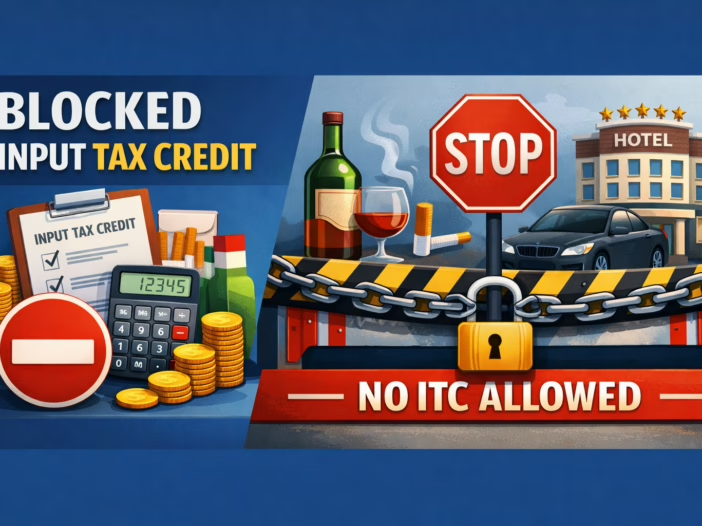
Blocked input tax credit plays a crucial role in the GST framework by clearly defining credits that taxpayers cannot claim. However, many businesses overlook these restrictions, which often leads to errors and compliance issues. Therefore, understanding blocked ITC at the outset helps taxpayers make informed decisions. Moreover, it ensures accurate GST returns and better financial control.
What is Blocked Input Tax Credit?
Blocked Input Tax Credit refers to GST paid on specific goods or services for which credit is expressly disallowed, even when such expenditure is incurred for business purposes.
These restrictions are laid down in Section 17(5) of the CGST Act, 2017, and they override the general ITC entitlement under Section 16. As a result, blocked ITC cannot be utilised to discharge GST liability and permanently becomes a cost to the business.
In practical terms, blocked ITC means:
- GST is paid on purchase
- Credit cannot be claimed
- The tax increases the cost of operations
Why Does GST Law Block Certain ITC Claims?
The GST law intentionally blocks certain credits to:
- Prevent misuse of ITC
- Restrict credit on personal or non-core expenses
- Ensure ITC flows only to genuine taxable output
Accordingly, Section 17(5) creates a statutory “negative list”, where credit is disallowed irrespective of business use, unless a specific exception applies.
Major Categories of Blocked Input Tax Credit (Section 17(5))
The following categories remain the most critical focus areas during GST audits and departmental scrutiny:
- Motor Vehicles and Conveyances
ITC is blocked on motor vehicles with seating capacity up to 13 persons. However, ITC is allowed when such vehicles are used for:
- Further supply of vehicles
- Transportation of passengers
- Training on driving such vehicles
- Insurance, Repair and Maintenance of Blocked Vehicles
ITC on insurance, servicing, repair, and maintenance of blocked vehicles is also disallowed, except in limited cases such as manufacturers, dealers, and transport service providers.
- Food, Beverages and Outdoor Catering
GST paid on food, beverages, and catering services is blocked, even if incurred for employees or clients. However, ITC is allowed if:
- The outward supply is of the same category, or
- The employer is legally mandated to provide such facilities
- Health and Beauty Services
Expenses relating to beauty treatment, cosmetic or plastic surgery, spas, and salons are blocked unless directly linked to taxable outward supplies.
- Club, Health and Fitness Memberships
Membership fees for clubs, gyms, and fitness centres are treated as personal benefits and remain blocked.
- Life and Health Insurance
ITC is blocked unless the employer is legally required to provide such insurance.
Further, from 22 September 2025, insurers are not allowed to claim ITC on commissions related to individual life and health insurance policies.
- Construction of Immovable Property
ITC on construction of buildings or office premises on own account is blocked, even when used for business, except for plant and machinery.
- Employee Travel Benefits
Leave travel concession and similar employee travel benefits fall under blocked credit.
- CSR Expenditure
GST paid on Corporate Social Responsibility (CSR) activities under the Companies Act is expressly blocked.
- Goods Lost, Stolen, Destroyed or Given as Free Samples
ITC must be reversed when goods are written off, lost, destroyed, or distributed free of cost.
Important Clarification on Plant and Machinery (Finance Act, 2025)
The Finance Act, 2025 has resolved long-pending disputes relating to ITC on construction:
- “Plant or machinery” has been clarified as “plant and machinery”
- The clarification applies retrospectively from 1 July 2017
- Only apparatus, equipment, and machinery fixed to earth qualify
Accordingly:
- Land and civil structures remain blocked
- Structural supports essential for machinery installation qualify
- Office buildings and commercial structures remain ineligible
Latest GST Developments Affecting Blocked ITC in 2026
As shared earlier, 2026 marks a decisive shift to portal-level enforcement:
System-Driven Blocking of Ineligible ITC
Wrongly claimed blocked ITC can now result in:
- Immediate system alerts
- Blocking of GSTR-3B filing
- Mandatory reversals with interest
Three-Year Time Bar Enforcement
The GST portal blocks filing of returns older than three years. Any ITC not claimed within this period is permanently lost.
ITC Reclaim Ledger Validation
When reversed ITC is reclaimed (for example, after 180-day payment), the system validates it with the ITC reversal ledger. Excess reclaim blocks return filing.
RCM Ledger Controls
GSTR-3B filing is restricted if Reverse Charge tax remains unpaid.
Automatic Registration Suspension
Failure to update bank details under Rule 10A may trigger automatic suspension of GST registration, freezing ITC activity.
Practical Impact on Businesses
Blocked ITC directly affects:
- Working capital
- Cost structure
- Pricing decisions
Since blocked credit is non-recoverable, businesses must factor it into cost sheets. Moreover, wrongful claims attract 24% interest, reversals, and potential notices.
Best Practices for CA Firms
To manage blocked ITC effectively in 2026:
- Reconcile GSTR-2B every month without exception
- Identify blocked credits at invoice-acceptance stage
- Maintain documentation for statutory exceptions
- Educate clients on cost-impact of blocked ITC
- Track GST law amendments and portal changes regularly
FAQs on Blocked Input Tax Credit under GST
- What is blocked input tax credit under GST?
Blocked ITC is GST paid on specified goods or services where credit is expressly disallowed under Section 17(5), even if incurred for business.
- Can ITC be claimed if the expense is business-related?
No. If the expense falls under Section 17(5), ITC remains blocked unless a statutory exception applies.
- Is ITC on motor cars always blocked?
No. ITC is allowed if the vehicle is used for resale, passenger transport, or driving training.
- Is ITC allowed on food provided to employees?
Only when the employer is legally mandated to provide such facilities.
- Can ITC be claimed on office building construction?
No. ITC is blocked except for plant and machinery.
- What happens if blocked ITC is wrongly claimed?
The credit must be reversed with 24% interest, and return filing may be blocked.
- Why is blocked ITC a major audit issue?
Because incorrect claims lead to interest, penalties, and immediate portal-level consequences.
Conclusion
Blocked input tax credit plays an important role in preventing misuse of GST benefits. However, taxpayers must clearly understand which credits are not allowed. Therefore, proper knowledge helps businesses avoid errors and penalties. Moreover, correct compliance ensures smooth GST filing. Ultimately, awareness of blocked ITC leads to better tax planning and financial discipline.