
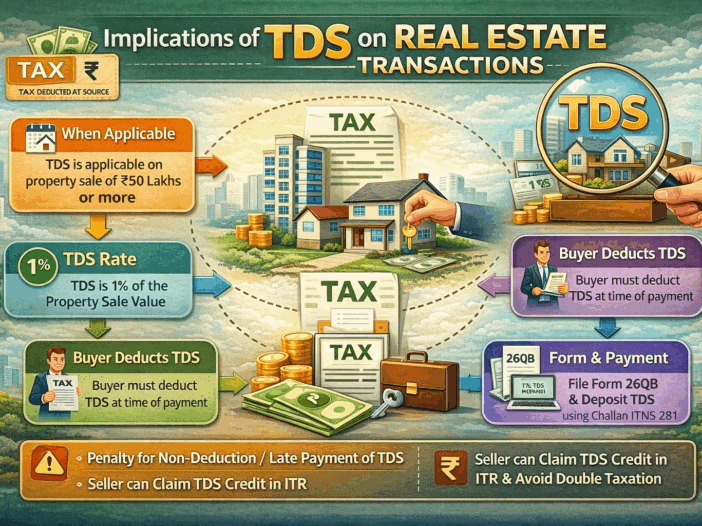
The Union Budget 2025, unveiled by the Finance Minister, introduced several policy measures aimed at streamlining the tax regime, improving transparency, and promoting compliance. One area that drew notable attention was the real estate sector, especially regarding Tax Deducted at Source (TDS) under Section 194-IA of the Income Tax Act. These changes are significant for anyone planning to buy property in India, as the government seeks to widen the tax base and curb evasion in high-value transactions.
Understanding TDS on Property Transactions (Section 194-IA)
Before exploring the Budget 2025 updates, let’s briefly revisit the existing provision:
- Section 194-IA mandates that TDS at 1% must be deducted by the buyer when purchasing an immovable property (other than agricultural land) with a consideration of ₹50 lakh or more.
- TDS must be deducted the time of payment or credit, whichever is earlier.
- The deducted amount is to be deposited with the government using Form 26QB within 30 days of the transaction.
- The buyer must issue a TDS certificate (Form 16B) to the seller as proof of deduction.
This provision was originally introduced to bring transparency and ensure that high-value real estate transactions were traceable and properly taxed.
Key Budget 2025 Announcements Affecting TDS on Property
1. Lowering of TDS Threshold from ₹50 Lakh to ₹45 Lakh
Previous Rule:
TDS applied only on property purchases ₹50 lakh or more.
Budget 2025 Update:
The threshold has now been reduced ₹45 lakh.
Impact:
This small but impactful revision expands the number of property transactions that will now come under the TDS net. Properties priced slightly below ₹50 lakh, which were previously exempt, will now require TDS compliance. With rising real estate prices, this change could significantly increase the compliance burden, particularly in Tier-II and Tier-III cities where many properties fall in the ₹45–₹50 lakh range.
2. TDS to Be Calculated on Higher of Sale Consideration or Stamp Duty Value
Existing Provision (Post Budget 2022):
TDS should be deducted on the higher of the sale price or stamp duty value.
Budget 2025 Emphasis:
The budget requirement and announces stricter monitoring and enforcement using digital property valuation databases.
Impact:
If a buyer agrees to purchase a property for ₹44 lakh but the stamp duty value is ₹46 lakh, TDS will be applicable since the stamp duty value exceeds ₹45 lakh. This curbs underreporting and protects government revenue, but buyers must now ensure proper property valuation before signing agreements.
3. Stricter PAN Validation and Aadhaar Linking Requirements
New Provision:
Buyer must verify that the seller’s PAN is valid, active, and linked with Aadhaar before deducting TDS.
Impact:
If the PAN is invalid or unlinked, the buyer may be liable to deduct TDS at 20% instead of 1% under Section 206AA. This places the onus on the buyer to conduct proper KYC (Know Your Customer) checks, failing which they may face penalties and increased tax liability.
4. Reduced Timeframe for Filing Form 26QB
Old Timeline:
Buyers had 30 days from date of transaction file Form 26QB.
Budget 2025 Update:
The filing period has now been reduced to 15 days from the date of payment or credit.
Impact:
This move intends to accelerate compliance and data availability for the Income Tax Department. However, it also means that buyers must act swiftly post-transaction and complete the filing and payment process in half the previously allowed time.
5. TDS Applicability Extended and Joint Development Agreements
Clarification in Budget 2025:
TDS provisions now explicitly apply to transactions made through Power of Attorney holders or in joint development agreements.
Impact:
Earlier, many of these deals fell into a grey area, often bypassing TDS compliance due to the lack of legal registration in the owner’s name. Now, whether the transaction is directly with the owner or through their authorized representative, TDS obligations remain the same.
Challenges Buyers Might Face Post-Budget
The changes, though well-intentioned, may create practical difficulties for property buyers:
- Awareness Gap: Many first-time home buyers may be unaware of their TDS responsibilities, especially in lower-tier cities.
- Shorter Compliance Window: With only 15 days to file Form 26QB, delays or errors in documentation could lead to penalties and interest.
- Increased Documentation: Verifying seller PAN and Aadhaar and checking stamp duty values add administrative burden.
- Ambiguity in Joint Ownership: In cases of multiple buyers or sellers, allocating TDS and correctly filing separate forms can become complex.
Steps Buyers Should Take Now
To remain compliant and avoid legal or financial complications, here’s what buyers should do post-Budget 2025:
- Budget for TDS Early: Consider the additional 1% of property value in your total cost.
- Check Property Valuation: Obtain the stamp duty value of the property in writing before agreeing to a price.
- Validate Seller PAN: Use the Income Tax Department’s e-filing portal to ensure PAN is valid and linked with Aadhaar.
- Act Quickly: Complete TDS payment and Form 26QB filing within 15 days of transaction/payment.
- Seek Professional Help: Consult a Chartered Accountant or legal advisor for complex deals involving , NRI sellers, or multiple owners.
Government’s Rationale Behind These Changes
The government’s goal with these TDS revisions is to:
- Enhance transparency in high-value real estate transactions.
- Minimize the scope for black money and undervaluation.
- Ensure timely tax collection and better record-tracking.
- Align with the broader vision of Digital India and faceless compliance.
With real estate being one of the largest unregulated sources of wealth transfer in the country, stronger compliance tools like TDS play a crucial role in plugging revenue leaks.
Conclusion
Budget 2025 has introduced important amendments to the TDS framework for real estate, significantly affecting property buyers. While these measures promise greater transparency and improved revenue for the government, they also increase the compliance burden on individuals making real estate investments. Buyers must now be more vigilant, better informed, and quicker in fulfilling their tax obligations to avoid penalties and stay on the right side of the law.
Whether you’re planning to purchase your first home or investing in property, understanding these new TDS rules is essential. When in doubt, seeking professional advice can help you navigate the complexities and ensure smooth property ownership.