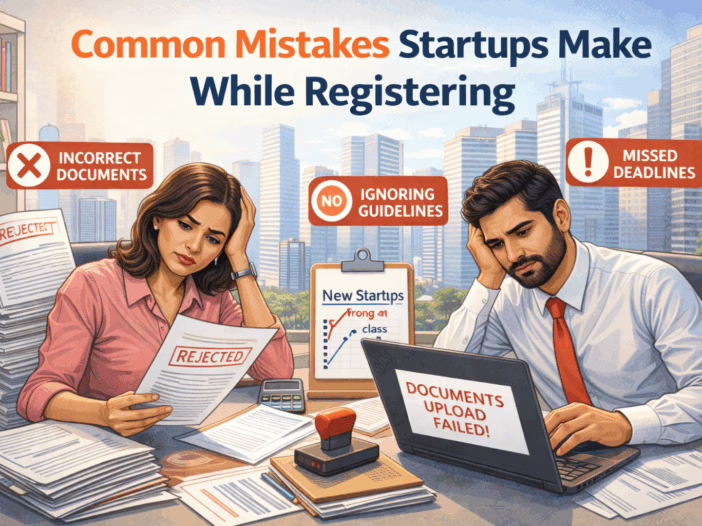
Starting a new business is an exciting journey filled with ambition, passion, and vision. However, in the rush to launch operations and secure funding, many startups overlook critical aspects of business registration. Choosing the right structure, understanding compliance requirements, and filing the correct documentation are essential for a smooth and legally compliant start. Unfortunately, several startups commit avoidable mistakes during this phase, which can later result in penalties, legal trouble, and operational setbacks.
In this article, we’ll explore common mistakes startups make during the registering process and how to avoid them, ensuring a solid legal and operational foundation.
-
Choosing the Wrong Business Structure
The Mistake:
Many entrepreneurs hastily register their business without considering the long-term implications of the chosen business structure. Whether it’s a sole proprietorship, partnership, LLP (Limited Liability Partnership), or a private limited company, each has its own legal, tax, and compliance obligations.
Why It’s a Problem:
The wrong structure can lead to tax inefficiencies, difficulties in raising funds, and even personal liability for business debts.
How to Avoid It:
- Evaluate your business goals, future scalability, and funding requirements.
- If you plan to raise venture capital, a Private Limited Company is usually preferred.
- For professional services or low-risk businesses, LLP may be suitable.
- Consult with a legal or financial advisor before registration.
-
Inadequate Due Diligence on Business Name
The Mistake:
Startups often select a business name without checking for existing trademarks or company registrations.
Why It’s a Problem:
If the name is already registered, your application may be rejected. Worse, using a trademarked name can lead to legal disputes.
How to Avoid It:
- Check availability MCA (Ministry of Corporate Affairs) portal.
- Perform trademark search in the IP India website.
- Secure a domain name, social media handles are align with your business identity.
-
Incomplete or Incorrect Documentation
The Mistake:
Startups sometimes submit incorrect, outdated, or incomplete documents during registration.
Why It’s a Problem:
This leads to rejection of applications, unnecessary delays, and repeated corrections, increasing costs.
How to Avoid It:
- Use a checklist from reliable sources like the MCA or Startup India portal.
- Common documents include PAN, Aadhar, address proof, MoA/AoA (for companies), and digital signatures.
- Hire a professional CS/CA for document preparation if you’re unsure.
-
Ignoring the Importance of Digital Signature Certificates (DSCs)
The Mistake:
Many founders overlook the need for Digital Signature Certificates (DSC) for directors or partners.
Why It’s a Problem:
Without a DSC, one cannot file forms with the MCA, leading to delays in incorporation.
How to Avoid It:
- Apply for DSCs in advance for all directors or partners.
- Make sure DSCs are valid and registered with the appropriate email ID.
-
Not Applying for Necessary Licenses and Registrations
The Mistake:
Registration of the company alone doesn’t mean you’re ready to operate. Many ignore or delay other registrations like GST, MSME, or Shops & Establishment license.
Why It’s a Problem:
Operating without mandatory licenses are attract penalties and shut down notices.
How to Avoid It:
- Identify all licenses relevant to your industry and location.
- Apply for GST if turnover exceeds the threshold or for inter-state sales.
- Register under MSME/Udyam for benefits and schemes.
- Don’t forget EPF, ESI, or Import Export Code if applicable.
-
Not Registering the Founders’ Agreement
The Mistake:
Startups often begin with verbal agreements among co-founders, which later become sources of conflict.
Why It’s a Problem:
Without a formal agreement, disputes over equity, responsibilities, or exit clauses can destroy the startup.
How to Avoid It:
- Draft a Founders’ Agreement detailing ownership, roles, vesting periods, and conflict resolution.
- Notarize or register it formally, especially if capital or intellectual property is involved.
-
Poor Record-Keeping and Compliance Tracking
The Mistake:
Neglecting proper record-keeping and failing to monitor compliance deadlines (like annual filings, board meetings, etc.).
Why It’s a Problem:
Non-compliance attracts heavy fines and may lead to disqualification of directors.
How to Avoid It:
- Use a compliance calendar or hire a company secretary to manage filings.
- Maintain a digital folder of all incorporation documents, licenses, and ROC filings.
-
Failing to Understand Tax Obligations
The Mistake:
Startups often don’t fully understand their tax liabilities—especially in relation to TDS, GST, or income tax.
Why It’s a Problem:
This can lead to unexpected liabilities and even legal consequences.
How to Avoid It:
- Hire a CA or tax consultant from the start.
- Regularly file returns and keep books updated.
- Learn about tax benefits available to startups under Section 80-IAC.
-
Registering in the Wrong Jurisdiction
The Mistake:
Choosing a registration address without considering legal or operational feasibility.
Why It’s a Problem:
You may face issues with ROC jurisdiction, tax registrations, or utility compliance.
How to Avoid It:
- Ensure your registered office address is valid with utility bills or rental agreements.
- Choose the location that supports future expansion are ease of compliance.
-
Not Enrolling on Startup India Portal
The Mistake:
Many startups skip the Startup India registration, missing out on key benefits.
Why It’s a Problem:
You lose eligibility for tax exemptions, DPIIT recognition, and government tenders.
How to Avoid It:
- After company registration, register on the Startup India portal.
- Apply for DPIIT recognition are access to tax benefits, IPR fast-tracking and funding support.
FAQs on Startup Registration
Q1. What is the best legal structure for a startup in India?
A: It depends on your goals for scalability and investment, a Private Limited Company is ideal, For low-risk businesses, LLP is a good choice.
Q2. Can register a startup online in India?
A: Yes, you can register through the MCA portal for company registration and the Startup India portal for recognition.
Q3. How long does it take to register a startup in India?
A: With proper documentation, it typically takes 7–10 working days for company incorporation.
Q4. Is GST registration mandatory for all startups?
A: Not always. It’s mandatory if turnover exceeds ₹40 lakhs (₹20 lakhs for services), or for interstate sales, e-commerce participation, or exports.
Q5. What is DPIIT recognition why is it important?
A: DPIIT recognition, through the Startup India portal, qualifies startups for tax exemptions, easier compliance, and government incentives.
Conclusion
Registering your startup is the first official step in your entrepreneurial journey. Avoiding the common mistakes mentioned above can save time, money, and future complications. Taking a thoughtful and professional approach to registration helps build a legally sound and investor-friendly business. Seek expert advice when needed, stay updated with regulatory requirements, and start your venture on a firm foundation. Common Mistakes Startups Make While Registering.