
Introduction
Every taxpayer need to understand the Income Tax Return (ITR) filing due dates to ensure timely compliance and avoid penalties. The Income Tax Department prescribes specific deadlines based on the nature of the taxpayer and audit applicability. Therefore, knowing the correct due date for Financial Year 2025–26 (Assessment Year 2026–27) is essential for individuals, professionals, and businesses.
In this article, you will find complete details of the applicable due dates, consequences of late filing, and important compliance points.
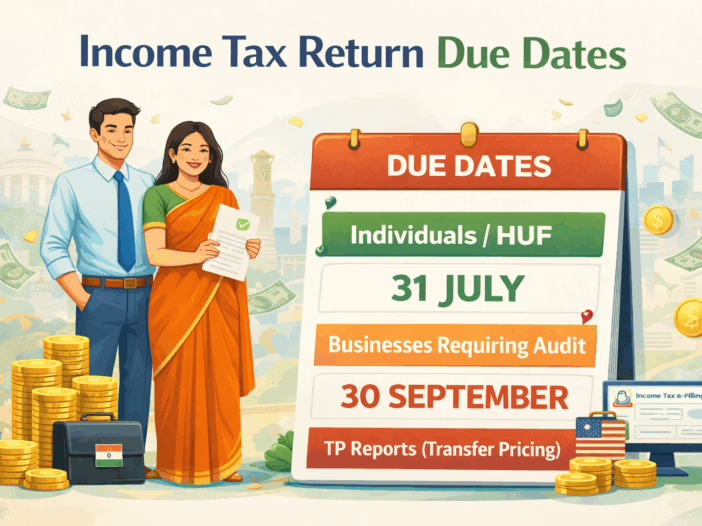
ITR Due Dates for FY 2025–26
- Individuals, HUF, and Salaried Taxpayers (No Audit Required)
Due Date: 31st July 2026
This category includes:
- Salaried individuals
- Pensioners
- Freelancers not liable for tax audit
- Small businesses opting for presumptive taxation (where audit is not applicable)
In most cases, salaried taxpayers fall under this category. Therefore, they must file their return on or before 31st July 2026.
- Businesses and Professionals Requiring Audit
Due Date: 31st October 2026
If your turnover exceeds the prescribed limit under Section 44AB, you must get your accounts audited. Consequently, the due date extends to 31st October 2026.
This applies to:
- Businesses crossing turnover limits
- Professionals exceeding prescribed gross receipt limits
- Any taxpayer required to submit a tax audit report
- Taxpayers Covered Under Transfer Pricing
Due Date: 30th November 2026
Taxpayers entering into international transactions or specified domestic transactions must comply with transfer pricing regulations. Hence, the law allows additional time until 30th November 2026.
This generally applies to:
- Companies with international transactions
- Entities dealing with associated enterprises
Belated Return – What If You Miss the Due Date?
If you fail to file your return within the original due date, you can still file a belated return.
Last Date for Belated Return: 31st December 2026
However, late filing results in:
- Late fee under Section 234F
- Interest under Section 234A
- Restriction on carrying forward certain losses (except house property loss)
Therefore, timely filing always benefits the taxpayer.
Updated Return (ITR-U)
In addition to regular and belated returns, the law allows filing an updated return.
- You can file ITR-U within 24 months from the end of the relevant Assessment Year.
- You must pay additional tax of 25% or 50%, depending on the delay period.
This option helps taxpayers voluntarily correct omissions and report additional income.
Important Compliance Points
Before filing your return, you should:
- Reconcile Form 26AS and AIS
- Verify TDS and advance tax details
- Confirm bank account validation
- Review deductions and exemptions carefully
Moreover, accurate reporting reduces the chances of notices and future litigation.
Frequently Asked Questions (FAQs)
- What happens if I file ITR after 31st July 2026?
You can file a belated return up to 31st December 2026. However, you must pay late fees and applicable interest.
- Can I revise my return after filing?
Yes. You can revise your return before 31st December 2026 or before completion of assessment, whichever is earlier.
- Is audit applicable to salaried individuals?
Generally, audit does not apply to salaried individuals unless they also run a business or profession exceeding prescribed limits.
- Can I carry forward losses if I file late?
You cannot carry forward most losses if you file a belated return. However, you can carry forward house property loss.
- Is it mandatory to file ITR if income is below taxable limit?
In certain situations, filing becomes mandatory even if income is below the taxable limit, such as high-value transactions or foreign assets.
Conclusion
Understanding the ITR filing due dates for Financial Year 2025–26 ensures smooth compliance and financial discipline. While the law provides options like belated and updated returns, timely filing always protects you from penalties, interest, and compliance complications. Therefore, prepare your documents in advance, verify your tax credits, and file your return within the prescribed due date to maintain a clean tax record.