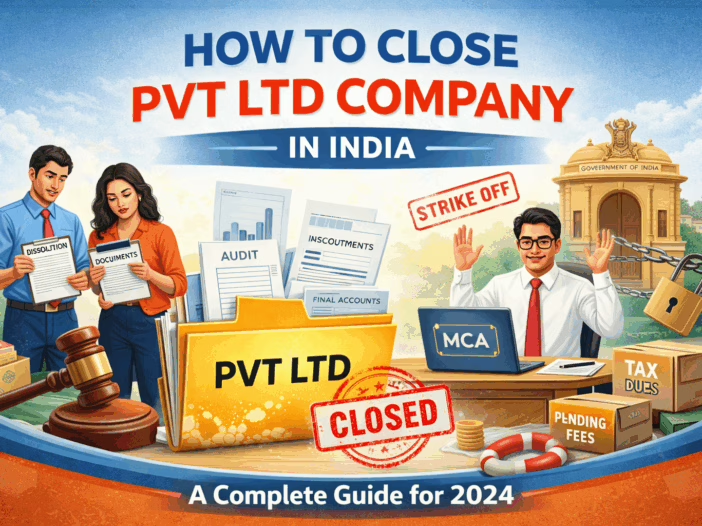
Closing a Private Limited Company in India is not just about stopping operations — it’s a legal process under the Companies Act, 2013 (Sections 248–252).
A company is a separate legal entity, so to dissolve it, you must follow specific procedures with the Registrar of Companies (ROC) or the National Company Law Tribunal (NCLT).
Properly closing a company ensures that directors, shareholders, and creditors are protected from future liabilities, penalties, or ROC actions.
Explains every legal route — including Strike Off (Form STK-2), Voluntary Winding Up, Compulsory Winding Up, and the Fast Track Exit (FTE) Scheme — with costs, timelines, and compliance tips.
Why Companies Choose to Close a Private Limited Company In India
Businesses may decide to close for various strategic or financial reasons:
- The business is unprofitable or unsustainable.
- The company has remained inactive for over two years.
- The original objectives have been achieved or are no longer relevant.
- Disputes among shareholders or directors.
- High compliance and regulatory costs.
- Transition to another business structure (e.g., LLP or Partnership).
Before deciding to close, consider alternatives such as converting the company to a dormant company under Section 455 if revival may be possible later.
For companies that haven’t operated in years, opting for an inactive company closure process through the MCA strike off rules can be an easier and quicker solution.
Methods to Close a Private Limited Company in India
Under the Companies Act, 2013, there are four main ways to legally dissolve or close a private limited company in india.
The right method depends on your company’s financial health, activity status, and liabilities.
| Method | Best For | Authority | Time Frame | Complexity | Approx. Cost |
| Strike Off / Voluntary Removal (Form STK-2) | Inactive companies with no assets/liabilities | ROC | 3–6 months | Simple | ₹10,000–₹25,000 |
| Voluntary Winding Up | Solvent companies wanting orderly closure | NCLT + ROC | 12–18 months | Moderate | ₹75,000–₹1,50,000 |
| Compulsory Winding Up | Insolvent or fraudulent companies | NCLT | 1–3 years | Complex | Variable |
| Fast Track Exit (FTE) | Defunct companies with no business | ROC (MCA Portal) | 2–3 months | Simple | ₹10,000–₹15,000 |
Method 1: Strike Off Process (Form STK-2 Filing in India)
What Is Strike Off?
The company strike off process in India allows a business that has ceased operations to voluntarily remove its name from the ROC register. Once approved, the company ceases to exist legally.
Eligibility Conditions
- The company must be inactive for at least the last two financial years.
- All assets and liabilities must be cleared before application.
- All statutory filings (AOC-4, MGT-7, GST, Income Tax) must be completed.
- No ongoing legal proceedings or investigations.
- Special Resolution must be passed by shareholders (at least 75%).
Step-by-Step Strike Off Process (Form STK-2 Filing)
- Board Resolution:
Conduct a Board Meeting to propose company closure and authorize one director to file Form STK-2. - Shareholder Approval:
Hold a General Meeting and pass a special resolution approving strike off. - Prepare Documents:
- Indemnity Bond (Form STK-3) signed by all directors
- Affidavit (Form STK-4) by each director confirming inactivity
- CA-certified Statement of Accounts (not older than 30 days)
- Bank Closure Certificate and final bank statement
- Board and shareholder resolutions
- Cancel All Registrations:
Surrender GST, PAN, TAN, ESI, EPF registrations and close all bank accounts. - Filing Form STK-2 on MCA V3 Portal:
File online via https://www.mca.gov.in → “MCA Services → Close Company.”
(As per MCA V3 update, all strike-off filings must be done online.) - Public Notice & Objection Period:
ROC publishes notice for 30 days in the Official Gazette for public objections. - Final ROC Approval:
After review, the ROC issues a Dissolution Order, and the company’s name is removed.
Pros & Cons
Advantages:
- Quick, simple, and cost-effective.
- Best for inactive or non-operational companies.
Disadvantages:
- Not suitable if liabilities exist.
- ROC may later restore the company if fraud is discovered.
Method 2: Voluntary Winding Up (Members’ Voluntary Liquidation)
When a company is solvent and wishes to close its affairs in an organized way, it can opt for voluntary winding up of company under the Companies Act.
Step-by-Step Process
- Board Meeting: Pass resolution proposing voluntary winding up.
- Declaration of Solvency: Directors sign a declaration that all debts can be paid within 12 months.
- Special Resolution: Shareholders approve winding up.
- Appoint a Liquidator: A CA, CS, or Insolvency Professional is appointed to manage the process.
- Creditors’ Meeting: Creditors confirm debt settlements and liquidation plan.
- Settle Liabilities and Distribute Surplus.
- Final Report & NCLT Application: Liquidator files report with ROC and applies to NCLT for final dissolution order.
Timeline: 12–18 months
Cost: ₹75,000–₹1,50,000 (including professional fees)
This ensures a transparent and lawful company dissolution under Companies Act 2013.
Method 3: Compulsory Winding Up (NCLT / Tribunal)
The compulsory winding up under NCLT process is initiated when the company is insolvent or non-compliant with laws.
When Used:
- Company unable to pay debts
- Fraud or misconduct by management
- ROC or Central Government files petition
- Public interest or non-compliance with law
Simplified Procedure:
- Petition filed before NCLT by company, ROC, or creditor.
- Tribunal issues public notice for objections.
- Liquidator appointed to manage company affairs.
- Assets liquidated and liabilities settled.
- NCLT issues final dissolution order.
Timeline: 1–3 years
Complexity: High — judicially supervised
Method 4: Fast Track Exit (FTE) Scheme
The Fast Track Exit (FTE) Scheme offers a faster, simpler way to close defunct or dormant companies that never started business.
Eligibility:
- Company has no business transactions since incorporation.
- No assets or liabilities on record.
- Not involved in any legal proceedings.
- All statutory filings are completed.
Steps:
- Board Resolution approving FTE.
- File Form FTE on MCA Portal with affidavit, indemnity bond, and CA-certified accounts.
- ROC reviews the documents and publishes name on MCA site for 30 days.
- After 30 days, ROC issues Certificate of Closure and publishes in the Gazette.
Timeline: 2–3 months
Cost: ₹10,000–₹15,000
The Fast Track Exit Scheme MCA helps you legally close your company faster with minimal paperwork.
Conversion into a Dormant Company under Section 455
If your business is temporarily inactive but may restart in the future, apply for Dormant Company Status under Section 455 of the Companies Act, 2013.
- File Form MSC-1 to obtain dormant status.
- Dormant companies enjoy relaxed compliance (no annual filings).
This is ideal when you plan to resume business later instead of permanent closure.
Practical Company Closure Checklist
| Stage | Key Action | Form / Proof | Authority |
| Preliminary | Board Meeting & Resolution | Board Minutes | Internal |
| Approval | Shareholder Special Resolution | MoM & Notice | ROC |
| Financial Compliance | File all pending returns & taxes | ITR, GST | ITD / GST |
| Document Preparation | Indemnity, Affidavit, CA Statement | STK-3, STK-4 | ROC |
| Filing | Submit Form STK-2 / FTE | Digital Filing | MCA |
| Objection Period | 30 days public notice | Gazette Notification | ROC |
| Final Order | ROC issues dissolution certificate | Gazette Copy | ROC |
| Record Retention | Maintain for 8 years | Company Records | — |
This company closure checklist India ensures compliance with all ROC and MCA requirements before dissolution.
Penalties for Not Closing an Inactive Company
If a company remains inactive but does not file closure:
- Section 92 & 137 – Late filing of Annual Return or Financial Statements:
₹1,00,000 + ₹500/day till default continues. - Section 164(2) – Director Disqualification for non-compliance.
- ROC Action under Section 248(1) – ROC may suo motu strike off company.
Avoid penalties by filing Form STK-2 and following the company strike off process in India on time.
Cost & Time to Close a Company
| Closure Type | Govt. Fees | Professional Charges (Approx.) | Total Time |
| Strike Off (STK-2) | ₹10,000 | ₹5,000–₹15,000 | 3–6 months |
| Voluntary Winding Up | ₹20,000 | ₹50,000–₹1,00,000 | 12–18 months |
| FTE Scheme | ₹10,000 | ₹5,000–₹10,000 | 2–3 months |
These costs include ROC strike off fees India and professional charges for documentation.
Tips & Cautions
- File all pending ITR and GST returns before applying for strike-off.
- Always involve a CA or CS for document preparation.
- Communicate with creditors and employees before closure.
- Maintain records safely for 8 years.
- If there’s a chance of future revival, apply for dormant status instead of full closure.
FAQs on Closing a Private Limited Company
Q1. How long does it take to close a private limited company?
Strike off: 3–6 months | Winding up: 12–18 months | FTE: 2–3 months.
Q2. Can a company be restored after closure?
Yes, NCLT can restore it within 20 years of strike-off.
Q3. Are directors liable after closure?
No, unless fraud or concealment is proven.
Q4. Can a company with liabilities apply for strike off?
No, all dues must be cleared before filing Form STK-2.
Q5. Is GST cancellation mandatory before closure?
Yes, all tax registrations (GST, TAN, PAN) must be surrendered first.
Q6. Do I need a CA/CS for company strike off?
Yes, professional certification and document attestation are mandatory.
Conclusion
Closing a Private Limited Company in India requires careful compliance — it’s not just business shutdown, but a legal dissolution of a registered entity.
Whether you choose Strike Off, Fast Track Exit, or Winding Up, following the proper ROC and MCA procedures ensures a clean legal exit and protects directors from future liabilities.