
Introduction
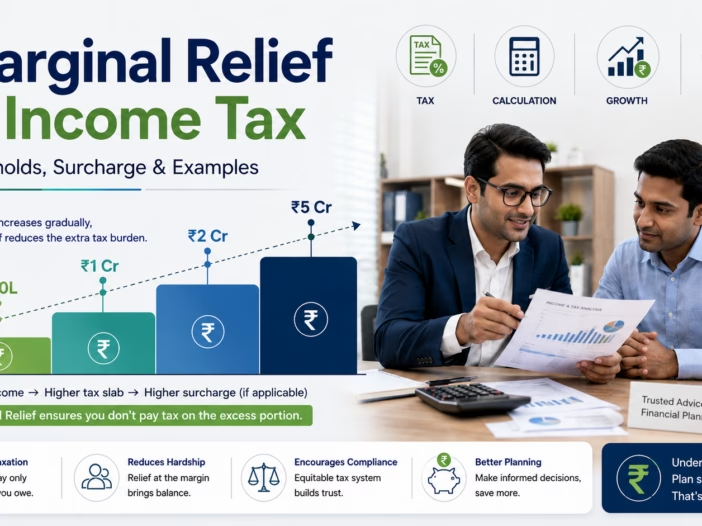
As your income increases, your income tax normally increases gradually. However, once your total income crosses certain specified limits, an additional tax called surcharge may become applicable.
This can sometimes create an unusual situation. For example, your income may increase by only a small amount, but the surcharge may increase your tax liability by a much larger amount. To prevent this unfair result, income tax law provides a benefit called marginal relief.
Marginal relief is especially important for high-income taxpayers, business owners, professionals and investors. Therefore, taxpayers in Greater Noida and other parts of India should understand how it works when their taxable income approaches a surcharge threshold.
What Is Marginal Relief in Income Tax?
Marginal relief is a tax benefit that reduces the impact of surcharge when a taxpayer’s income slightly exceeds the prescribed surcharge limit.
In simple words, the government does not want you to pay ₹1 lakh extra tax merely because your income increased by ₹10,000.
Therefore, marginal relief ensures that the additional income tax and surcharge caused by crossing a threshold does not exceed the amount of additional income earned above that threshold.
What Is Surcharge in Income Tax?
Surcharge is an additional charge on income tax.
It is important to understand that surcharge is not directly calculated on your total income. Instead, the government calculates your normal income tax first and then applies the applicable surcharge percentage to that tax.
For example, if your income tax is ₹10 lakh and a surcharge of 10% applies, the surcharge will generally be ₹1 lakh before considering marginal relief.
Therefore:
Income Tax = Tax calculated on taxable income
Surcharge = Additional percentage charged on income tax
Health and Education Cess = 4% on income tax plus surcharge
The applicable Health and Education Cess is currently 4%.
Surcharge Thresholds for Individuals
For individuals and similar taxpayers, surcharge starts once total income exceeds ₹50 lakh.
The applicable rates differ slightly between the old and new tax regimes.
| Total Income | New Tax Regime | Old Tax Regime |
|---|---|---|
| Up to ₹50 lakh | Nil | Nil |
| Above ₹50 lakh up to ₹1 crore | 10% | 10% |
| Above ₹1 crore up to ₹2 crore | 15% | 15% |
| Above ₹2 crore up to ₹5 crore | 25% | 25% |
| Above ₹5 crore | 25% | 37% |
Thus, under the new tax regime, the maximum general surcharge rate is 25%. Under the old regime, the surcharge can reach 37% for very high-income taxpayers.
When Does Marginal Relief Become Important?
Marginal relief generally becomes relevant when your income crosses one of the surcharge thresholds by a relatively small amount.
For individuals, the important thresholds are:
- ₹50 lakh
- ₹1 crore
- ₹2 crore
- ₹5 crore under the old tax regime
Under the new tax regime, there is no separate higher surcharge rate after ₹5 crore because the maximum general surcharge is already capped at 25%.
How Does Marginal Relief Work?
The basic principle is simple.
Suppose your taxable income crosses ₹50 lakh.
First, calculate normal income tax and surcharge on your actual income.
Next, calculate the income tax that would have been payable if your taxable income were exactly ₹50 lakh.
Then compare the additional tax liability with the amount by which your income exceeds ₹50 lakh.
If the additional tax is higher than your additional income, marginal relief reduces the excess tax.
In simple terms:
Maximum additional tax due to crossing the threshold = Additional income above the threshold
This prevents the taxpayer from losing money merely because income crossed a surcharge limit.
Example of Marginal Relief at ₹50 Lakh
Suppose a taxpayer under the old tax regime has taxable income of ₹50,10,000.
The income exceeds the ₹50 lakh threshold by only:
₹50,10,000 − ₹50,00,000 = ₹10,000
Normal income tax on ₹50,10,000 is approximately ₹13,15,500 before cess.
Since the income exceeds ₹50 lakh, a surcharge of 10% would normally apply.
Surcharge:
10% of ₹13,15,500 = ₹1,31,550
Therefore, tax plus surcharge would become:
₹13,15,500 + ₹1,31,550 = ₹14,47,050
However, income tax on ₹50 lakh is approximately ₹13,12,500.
The taxpayer earned only ₹10,000 above the surcharge threshold.
Therefore, after marginal relief, the tax plus surcharge should generally not exceed:
₹13,12,500 + ₹10,000 = ₹13,22,500
Without marginal relief:
₹14,47,050
After applying the marginal-relief principle:
₹13,22,500
Therefore, marginal relief substantially reduces the sudden additional surcharge burden in this situation.
Health and Education Cess is calculated after considering the applicable surcharge and marginal relief.
Marginal Relief at ₹1 Crore
The same principle applies when total income slightly exceeds ₹1 crore.
Suppose your taxable income becomes ₹1,00,50,000.
You have earned only ₹50,000 above ₹1 crore.
However, crossing ₹1 crore increases the surcharge rate from 10% to 15%.
If the resulting increase in income tax and surcharge is more than ₹50,000 compared with the tax payable at ₹1 crore, marginal relief reduces the excess amount.
Therefore, the tax system prevents the surcharge jump from taking away more than the additional income earned.
The Income Tax Department specifically provides marginal relief at the ₹50 lakh, ₹1 crore and ₹2 crore surcharge thresholds and, under the old regime, at the ₹5 crore threshold as well.
Marginal Relief at ₹2 Crore
Similarly, when taxable income crosses ₹2 crore, the surcharge rate generally rises from 15% to 25%.
Therefore, someone earning just slightly more than ₹2 crore could otherwise face a substantial increase in tax.
Marginal relief limits this sudden increase.
The taxpayer’s income tax and surcharge should not exceed the amount payable at ₹2 crore by more than the income earned above ₹2 crore.
Marginal Relief Above ₹5 Crore
Under the old tax regime, the general surcharge rate rises from 25% to 37% when income exceeds ₹5 crore.
Therefore, marginal relief may become important when income is just above ₹5 crore.
The relief ensures that the additional tax and surcharge compared with the tax payable at ₹5 crore does not exceed the amount of income earned above ₹5 crore.
Under the new tax regime, the general surcharge rate does not increase beyond 25% merely because income crosses ₹5 crore.
Special Rule for Dividend and Certain Capital Gains
Taxpayers with high income should also consider the nature of their income.
The maximum surcharge on tax payable on dividend income and certain capital gains is generally restricted to 15%.
This includes specified short-term and long-term capital gains covered by the relevant provisions of income tax law.
Therefore, the final surcharge calculation may differ when a person’s total income includes salary, business income, dividend income and capital gains.
Is Marginal Relief Available to Firms and LLPs?
Yes. Marginal relief is not limited to salaried individuals.
A partnership firm or LLP generally pays surcharge at 12% when taxable income exceeds ₹1 crore.
However, marginal relief protects the firm or LLP when its income slightly exceeds ₹1 crore.
In such a case, income tax plus surcharge should not exceed the tax payable on ₹1 crore by more than the amount of income exceeding ₹1 crore.
Is Marginal Relief Available to Companies?
Yes. Companies can also receive marginal relief where surcharge becomes applicable after crossing the relevant income limits.
For a domestic company under the general tax provisions, surcharge rates can apply at specified income thresholds, including ₹1 crore and ₹10 crore. Marginal relief helps prevent a disproportionate increase in tax when income only slightly crosses those thresholds.
However, company taxation can vary depending on the tax option selected. Therefore, companies should calculate surcharge according to the tax provisions applicable to them.
Marginal Relief vs Tax Rebate
Marginal relief and tax rebate are not the same.
A tax rebate directly reduces the income tax payable when the taxpayer satisfies specified conditions.
Marginal relief, on the other hand, protects taxpayers against an excessive increase in tax caused by crossing a particular income threshold.
There is also a separate concept of marginal relief connected with the rebate available to eligible resident individuals under the new tax regime. That relief should not be confused with marginal relief from surcharge discussed in this article.
Do You Need to Apply Separately for Marginal Relief?
Normally, you do not need to submit a separate application merely to claim marginal relief while calculating your regular income tax liability.
The relief forms part of the tax computation where the applicable conditions are satisfied.
However, taxpayers should carefully verify the calculation, especially when their income includes capital gains, dividends, business income or income taxable at special rates.
Why Is Marginal Relief Important?
Marginal relief makes the tax system fairer.
Without it, a person whose income rises slightly above a surcharge threshold could actually be left with less post-tax income because of the sudden increase in surcharge.
Marginal relief removes this distortion.
Therefore, taxpayers whose income is near ₹50 lakh, ₹1 crore, ₹2 crore or other applicable surcharge thresholds should calculate their tax carefully before filing their income tax return.
Marginal Relief for Taxpayers in Greater Noida
Greater Noida has a growing number of professionals, salaried employees, entrepreneurs, investors, LLPs and companies.
As a result, taxpayers may have income from several sources, such as salary, business, rent, capital gains, dividends and interest.
If your taxable income is close to a surcharge threshold, proper tax computation becomes particularly important. A small difference in taxable income can affect surcharge and marginal relief significantly.
Therefore, reviewing the nature of income and the applicable tax regime before filing the return can help avoid incorrect tax calculations.
Conclusion
Marginal relief protects taxpayers from an excessive tax burden when their income slightly crosses a surcharge threshold.
Surcharge generally begins for individuals when taxable income exceeds ₹50 lakh and increases at higher income levels. However, marginal relief ensures that the extra income tax and surcharge caused by crossing a threshold do not become disproportionately higher than the extra income earned.
In simple words, earning a little more should not leave you worse off merely because you crossed a surcharge limit.
Therefore, if your taxable income is close to ₹50 lakh, ₹1 crore, ₹2 crore or another applicable surcharge threshold, calculate marginal relief carefully before finalising your income tax return.
Frequently Asked Questions (FAQs)
1. What is marginal relief in income tax?
Marginal relief reduces the additional tax burden that arises when a taxpayer’s income slightly exceeds a surcharge threshold.
2. What is surcharge?
Surcharge is an additional percentage charged on the amount of income tax when taxable income crosses specified limits.
3. At what income does surcharge start for an individual?
For an individual, surcharge generally starts when total income exceeds ₹50 lakh.
4. What is the surcharge rate above ₹50 lakh?
The surcharge rate is generally 10% when taxable income exceeds ₹50 lakh but does not exceed ₹1 crore.
5. What is the surcharge rate above ₹1 crore?
The general surcharge rate increases to 15% when taxable income exceeds ₹1 crore but does not exceed ₹2 crore.
6. What is the surcharge rate above ₹2 crore?
The general surcharge rate is 25% when taxable income exceeds ₹2 crore, subject to the applicable tax regime and nature of income.
7. What is the maximum surcharge under the new tax regime?
The maximum general surcharge rate under the new tax regime is 25%.
8. Is surcharge charged on total income?
No. Surcharge is charged on the amount of income tax, not directly on total income.
9. Is marginal relief available automatically?
Marginal relief forms part of the tax computation when the applicable conditions are satisfied. The taxpayer should still verify that the relief has been calculated correctly.
10. Is marginal relief available to an LLP?
Yes. A firm or LLP can receive marginal relief when its income slightly crosses the ₹1 crore surcharge threshold.
11. Is marginal relief available to companies?
Yes. Companies can also receive marginal relief when their income crosses the applicable surcharge thresholds.
12. Is marginal relief the same as rebate?
No. A rebate directly reduces income tax subject to specified conditions, while marginal relief prevents a disproportionate increase in tax when income crosses a specified threshold.
13. Does marginal relief apply to capital gains?
It can affect taxpayers who have capital gains, but special surcharge restrictions apply to certain capital gains. Therefore, the nature of the capital gain must be considered while calculating the final tax liability.
14. Is Health and Education Cess charged after marginal relief?
Yes. Health and Education Cess is charged at 4% on income tax plus the applicable surcharge after considering the tax computation.
15. Why should I check marginal relief before filing my ITR?
If your taxable income is close to a surcharge threshold, marginal relief can significantly reduce the additional tax created by the surcharge. Therefore, checking the calculation can prevent excess tax payment.