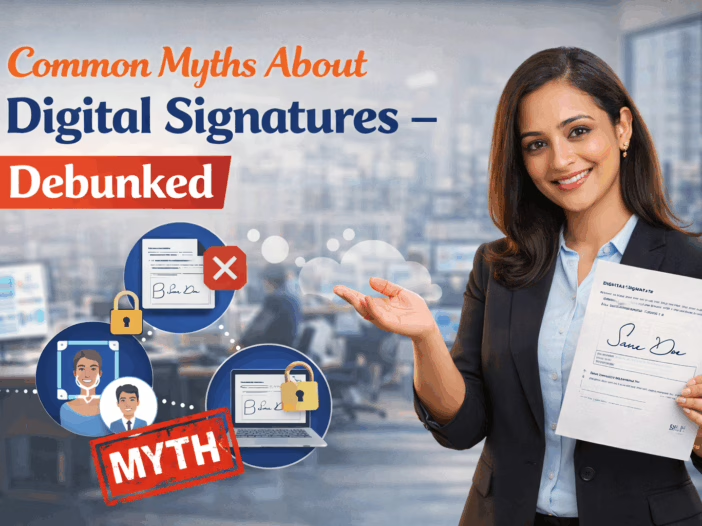
In today’s digital age, businesses, professionals, and even individuals are increasingly shifting toward paperless documentation. Digital signatures, a key component of this movement, ensure authenticity, integrity, and security in electronic documents. Despite their growing use, digital signatures are still surrounded by misconceptions that hinder their wider adoption. Let’s debunk some of the most common myths about digital signatures and understand the truth behind this powerful digital tool.
Myth 1: Digital Signatures is the Same as Scanned Signatures
A digital signature is not the same as scanning your handwritten signature and pasting it a document. Digital signatures use in cryptographic algorithms with the content of a document. The signature are unique, verifiable and tamper-evident. Scanned signatures, on the other hand, offer no security proof of authenticity.
Myth 2: Digital Signatures Are Not Legally Valid
Digital signatures are legally recognized in most countries, including India under the Information Technology Act, 2000, and globally under laws like the eIDAS Regulation (EU) and ESIGN Act (USA). As long as the digital signature is issued by a valid certifying authority and follows the legal framework, it is considered legally binding in courts.
Myth 3: Digital Signatures Can Be Easily Forged
This is a widespread but incorrect belief. Digital signatures are secured using public key infrastructure (PKI), which involves complex cryptographic techniques. A private key (known only to the signer) is used to sign the document, and a corresponding public key is used to verify it.
Myth 4: You Need to Be a Tech Expert to Use Digital Signatures
Modern digital signature solutions are user-friendly and designed for individuals with little to no technical knowledge. Certifying Authorities provide easy-to-use digital signature certificates (DSCs) and plug-and-play tokens. Signing documents is often as simple as clicking a button in popular applications like Adobe Acrobat or using online platforms.
Myth 5: Digital Signatures Are Only for Big Corporates
While large organizations were early adopters of digital signatures, they are now widely used by freelancers, small businesses, tax consultants, and individuals alike. In fact, digital signatures are essential for filing income tax returns, GST, MCA forms, and tenders, regardless of the size of the organization.
Myth 6: A Digital Signature Can Be Reused or Misused Once It’s Shared
Digital signature certificates are securely stored in USB tokens or cloud-based secure vaults, and they require a password or OTP for use. Sharing the certificate doesn’t mean it can be used by others unless they also have access to your password or authentication device. With proper handling, digital signatures are highly secure.
Myth 7: Paper Signatures Are Safer Than Digital Signatures
Paper signatures is more vulnerable to forgery and tampering. Digital signatures provide audit trails, time stamps, and encryption that make them far more secure than traditional ink signatures. They also eliminate the risk of losing physical documents.
Conclusion
Digital signatures are a revolutionary technology that enhances the security, efficiency, and reliability of electronic documentation. By debunking these common myths, we can better appreciate their role in modern digital workflows. Embracing digital signatures is not just about keeping up with technology — it’s about ensuring smarter, safer, and faster transactions in the digital world. Read more about how to create digital signatures in Greater Noida.