
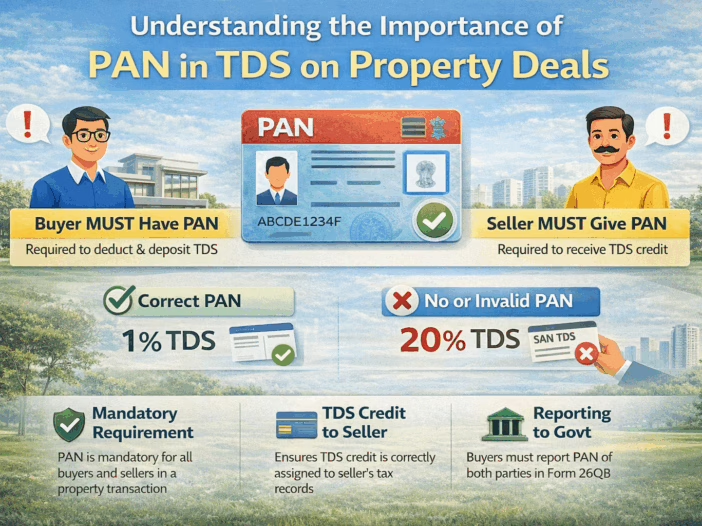
Emphasizing the Role of PAN for Both Buyers and Sellers in TDS Compliance
Property transactions in India often involve a significant amount of money, and to prevent tax evasion, the Income Tax Department has mandated Tax Deducted at Source (TDS) on such deals under Section 194-IA of the Income Tax Act. The most critical components of this compliance process is the Permanent Account Number (PAN) — a unique 10-character alphanumeric identifier issued by the Income Tax Department.
This article explores the pivotal role of PAN in TDS compliance related to property purchases, and how both buyers and sellers must ensure its proper use to avoid penalties, processing delays, and legal hurdles.
What is TDS on Property Transactions?
Under Section 194-IA, any buyer of immovable property (other than agricultural land) must deduct 1% TDS sale consideration at the time of payment if property value is ₹50 lakhs or more. This TDS must be deposited with the government, and Form 26QB must be filed by the buyer within 30 days from the end of month in which the deduction is made.
Why is PAN Crucial in These Transactions?
PAN is not just a formality in property transactions involving TDS — it is a mandatory compliance tool that ensures proper linkage and credit of the TDS deducted. It plays several essential roles for both the buyer and the seller:
A. Role of PAN for Buyers
- Mandatory for Filing Form 26QB
Buyers must furnish their PAN details while filing Form 26QB. Without a valid PAN, the form cannot be filed, and the TDS cannot be deposited. - Linking TDS Deduction with the Seller
The PAN of the seller must also be correctly entered by the buyer in Form 26QB. This ensures that the TDS amount gets reflected in the seller’s Form 26AS, which is essential for the seller to claim credit. - Avoiding Higher TDS Rate
- The buyer fails to collect and report the seller’s valid PAN, the TDS will be deducted at a higher rate of 20% instead of 1% under Section 206AA. This significantly increases the financial burden and can strain buyer-seller relations.
- Issuance of Form 16B
after depositing TDS and filing Form 26QB, buyers download Form 16B (TDS certificate) from the TRACES portal and issue it to the seller. This is only possible if both buyer’s and seller’s PANs are correctly furnished.
B. Role of PAN for Sellers
- Ensures TDS Credit in Form 26AS
When the seller’s PAN is quoted correctly in Form 26QB, the deducted TDS reflects in their Form 26AS, which is essential for computing tax liability and claiming TDS credit in the Income Tax Return (ITR). - Smooth Processing of ITR and Refunds
If PAN is not correctly linked, or if the seller does not provide the correct PAN, the TDS credit may not be visible in Form 26AS. This may result in tax demand or rejection of refund claims. - Required for Capital Gains Reporting
Sellers who are liable to report capital gains on property sales must use their PAN while filing ITR. The TDS deducted on sale proceeds helps offset tax liability on these gains, making PAN linkage crucial. - Avoidance of Litigation and Notices
Non-disclosure or incorrect PAN can attract notices from the Income Tax Department, leading to unnecessary litigation and stress.
Common Mistakes Related to PAN in TDS Compliance
- Entering Incorrect PAN
Even a single incorrect digit in the PAN can lead to failure in TDS credit reflection. Always double-check PAN details before filing. - Using a PAN Not Linked to the Property Seller
Sometimes buyers mistakenly enter the name of a different individual or company. PAN should belong to the person whose name is on the sale deed. - Failure to Verify PAN Status
PAN should be active and valid. Dormant or deactivated PANs can result in rejection of Form 26QB filing. - Mismatch of PAN with Names in Sale Deed
Ensure that the names as per the PAN and the property sale deed are aligned to prevent verification issues at the time of form filing.
What If There Are Multiple Buyers or Sellers?
In the case of joint ownership:
- Each buyer must file a separate Form 26QB for each seller. PANs of all buyers and all sellers involved in the transaction must be correctly provided in each form.
- For instance, if there are 2 buyers and 2 sellers, 4 Forms 26QB must be filed (2×2).
- The TDS amount will be divided proportionally based on the share of ownership and consideration.
Penalties for Non-Compliance
If the PAN is not provided or wrongly quoted:
- A higher TDS rate of 20% under Section 206AA will be applied.
- Penalty ₹10,000 under Section 272B levied for quoting incorrect PAN.
- Interest under Section 201(1A) at 1% per month for delay in TDS deduction and 1.5% for delay in payment.
- Late fee of ₹200 per day under Section 234E for delay in filing Form 26QB.
How to Verify PAN?
Buyers can verify the seller’s PAN by using the PAN Verification facility on the Income Tax Department’s e-filing portal or TRACES. This ensures accuracy before filing Form 26QB.
Conclusion
Property transactions, PAN acts as a linchpin for TDS compliance. For buyers, it is necessary to ensure proper deduction, deposit, and reporting of TDS. For sellers, it ensures rightful credit and smooth tax filing. Errors or negligence in PAN handling can lead to financial loss, penalties, and unnecessary disputes.
Hence, both buyers and sellers must treat PAN as a vital legal document, not just for identification, but as a gateway to lawful and compliant property transactions.