
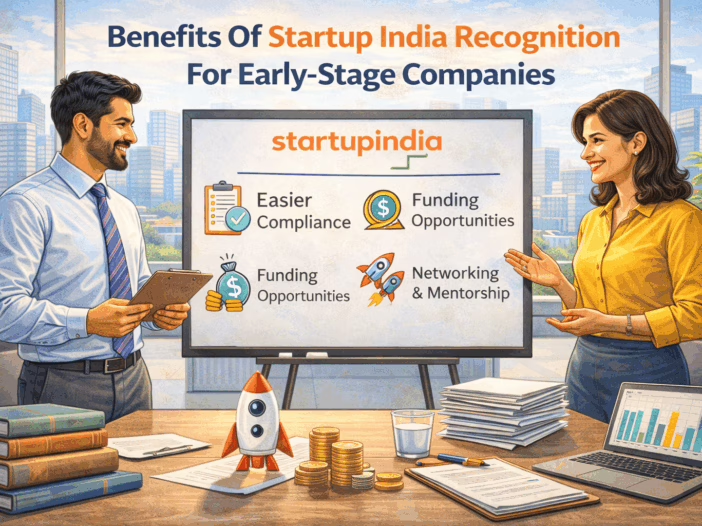
India’s startup ecosystem has been one of the fastest-growing in the world, and a major driver behind this momentum has been the Government of India’s Startup India initiative. Launched in January 2016, the initiative aims to create a nurturing environment for startups by offering a wide range of support in areas like funding, compliance, taxation, and intellectual property protection.
For early-stage startups, securing Startup India recognition from the Department for Promotion of Industry and Internal Trade (DPIIT) can be a vital strategic step. It offers both tangible and intangible benefits that can greatly ease the journey from idea to execution and growth.
Key Benefits of Startup India Recognition
- Self-Certification for Compliance
Startups can self-certify under:
- 6 Labour Laws
- 3 Environmental Laws
This reduces the compliance burden for the first 10 years, allowing startups to operate with fewer inspections and legal hurdles.
- Tax Exemptions
Recognized startups are eligible for:
- Income Tax Exemption: 100% tax exemption on profits for any three consecutive years out of the first ten years (under Section 80-IAC of the Income Tax Act).
- Capital Gains Exemption: Exemption on long-term capital gains when invested in eligible funds or in startups.
These benefits help early-stage startups manage cash flow and reinvest profits into business growth.
- Easier Access to Funding
- Access to the ₹10,000 crore Fund of Funds managed by SIDBI, which invests in venture capital funds supporting startups.
- Eligibility like Startup India Seed Fund Scheme (SISFS) it provides financial assistance for Poc, prototype development, product trials, etc.
This is a crucial advantage for startups that may struggle to raise initial rounds of funding.
- Faster Intellectual Property Rights (IPR) Processing
- Fast-track patent examination and application.
- Up to 80% rebate on patent filing fees and 50% rebate on trademark fees.
- Support from IPR facilitators appointed by the government, free of cost.
Startups can protect their innovations quickly and affordably.
- Government Tender Benefits
- Startups get exempted from prior experience or turnover criteria when applying for government tenders.
- Startups are compete with established players on a level playing field.
- Networking and Incubation Support
- Access to incubation centres, innovation hubs, and mentorship networks under initiatives like the Atal Innovation Mission.
- Opportunities to attend national and international startup events, pitch competitions, and workshops.
This ecosystem helps startups connect with investors, industry experts, and peers.
- Ease of Winding Up
Recognized startups can wind up operations within 90 days under the Insolvency and Bankruptcy Code (IBC), 2016 — which is much faster than the traditional timeline.
Frequently Asked Questions (FAQs)
Q1. What is Startup India recognition?
Startup India recognition is a certification granted by DPIIT to startups that meet specific eligibility criteria. It enables them to access various government benefits and support systems.
Q2. Who is eligible for Startup India recognition?
An entity is eligible if:
- A private limited company, LLP or partnership firm
- Incorporated within the last 10 years
- Has turnover below ₹100 crore
- Is working towards innovation or improvement a product, process or service
- It is not formed by splitting or restructuring an existing business
Q3. How can a startup apply for recognition?
Startups can apply through the Startup India portal. The application requires:
- Certificate of incorporation/registration
- Details about the business and innovation
- PAN, GST details (if applicable)
Q4. What are the documents required for recognition?
- Certificate of Incorporation/Registration
- PAN card of the entity
- Brief write-up on how the business is innovative
- Details of funding (if any)
- Website/pitch deck/product demo (if available)
Q5. Is Startup India recognition only for tech startups?
No, it is open to any industry or sector as long as the business involves innovation, scalability, or development of a unique product/service/process.
Q6. How does long it take to get DPIIT recognition?
Once the application is submitted with all documents, recognition is typically granted within 2–7 working days, subject to approval.
Q7. Can a recognized startup lose its status?
Yes. If a startup ceases to meet eligibility criteria—such as exceeding turnover limits, or the entity turning 10 years old—it will lose recognition and associated benefits.
Conclusion
Startup India recognition is a valuable asset for early-stage companies aiming to scale up in a competitive market. From tax benefits and funding access to IPR protection and easier compliance, the recognition opens multiple doors that otherwise remain closed to new businesses.