
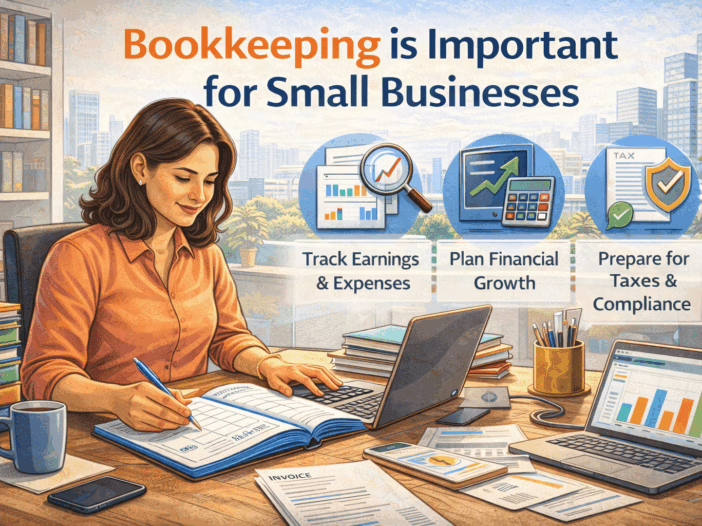
In the fast-paced world of entrepreneurship, small business owners often juggle multiple roles—from sales and marketing to customer service and operations. Amidst this whirlwind, bookkeeping can seem like a tedious chore. However, it is one of the most critical functions for a business’s long-term success and sustainability.
What is Bookkeeping?
Bookkeeping is the process of record , maintain and analyze a business’s financial transactions. It includes tracking income, expenses, invoices, receipts, and payments. Unlike accounting, which involves interpreting and analyzing data, bookkeeping is more about the accurate documentation and categorization of all financial activity.
Why is Bookkeeping Important for Small Businesses?
- Helps Maintain Accurate Financial Records
Accurate bookkeeping provides a effective business’s financial health. It helps in knowing how much money is coming in and going out, what expenses are recurring, and whether the business is making a profit or running into losses.
- Ensures Compliance with Legal and Tax Regulations
Every business is required to maintain proper financial records for tax purposes. Proper bookkeeping helps in filing accurate tax returns, claiming deductions, and avoiding penalties or legal complications. It also ensures that records are available in case of audits.
- Supports Better Decision-Making
With up-to-date books, business owners can make informed decisions—whether it’s hiring new staff, purchasing inventory, or expanding operations. Real-time financial data helps in planning budgets, managing cash flow, and setting realistic business goals.
- Improves Cash Flow Management
Cash flow is the lifeline of any business. Through bookkeeping, small businesses can monitor outstanding receivables and payables, manage bill payments on time, and ensure there is enough cash on hand to operate effectively.
- Builds Investor and Lender Confidence
If you are seeking investment or applying for a business loan, financial transparency is crucial. Well-maintained books demonstrate professionalism and financial responsibility, making it easier to gain the trust of potential investors or lenders.
- Prevents Financial Errors and Fraud
Bookkeeping creates a system of checks and balances. By regularly reviewing financial statements and reconciling bank accounts, small businesses can detect discrepancies, prevent fraudulent activity, and avoid costly mistakes.
Bookkeeping Options for Small Businesses
- Manual Bookkeeping: Using spreadsheets or written records. Suitable for very small or one-person businesses.
- Accounting Software: Tools like QuickBooks, Zoho Books, and Tally simplify the process and provide real-time insights.
- Outsourcing: Hiring a bookkeeper or accounting firm to manage your books can be cost-effective and ensures compliance with current laws.
Tips for Effective Bookkeeping
- Keep business and personal finances separate.
- Maintain all receipts and financial documents.
- Reconcile bank statements monthly.
- Review your books regularly (weekly or monthly).
- Seek professional help when necessary.
Conclusion
Bookkeeping may not be the most effective part of running a small business, but it is undoubtedly one of the most important. By prioritizing accurate bookkeeping, small business owners can not only avoid financial reports but also set the stage for effective growth and success it is called Bookkeeping for Small Businesses.