
Introduction
A Limited Liability Partnership (LLP) is easy to manage and requires fewer compliances. However, as businesses grow, many owners prefer converting the LLP into a Private Limited Company to gain better credibility, attract investors, and expand operations.
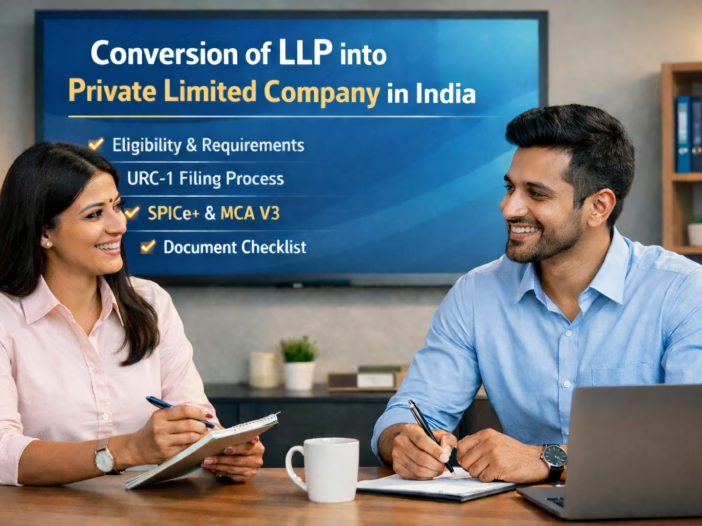
The conversion of an LLP into a private limited company is governed by Section 366 of the Companies Act, 2013 and the Companies (Authorized to Register) Rules, 2014. Moreover, businesses must complete the entire process through electronic filing on the MCA V3 portal.
Legal Framework for Conversion
The conversion of an LLP into a private limited company is regulated under the following provisions:
- Section 366 of the Companies Act, 2013
- Companies (Authorized to Register) Rules, 2014
Under these provisions, an existing entity such as an LLP can register itself as a company with the Registrar of Companies (ROC). As a result, the entity continues its business in the form of a company after completing the conversion process.
Eligibility and Pre-Requisites
Before starting the conversion process, the LLP must meet certain conditions.
1. Minimum Number of Partners
First, the LLP must have at least two partners, because a private limited company requires a minimum of two shareholders.
2. Compliance Status of LLP
Next, the LLP must ensure that it is fully compliant with statutory filings, particularly:
- Form 8 – Statement of Accounts and Solvency
- Form 11 – Annual Return
If the LLP status is defunct or under liquidation, the Registrar will not allow the conversion.
3. Consent of Partners
In addition, all partners must give their written consent for the conversion. This requirement ensures that every partner agrees to the structural change.
4. No Objection from Creditors
Furthermore, if the LLP has secured creditors, it must obtain a No Objection Certificate (NOC) from them before starting the conversion process.
Step-by-Step Procedure for Conversion
1. Name Reservation through SPICe+ (Part A)
First, apply for the proposed company name through SPICe+ Part A on the MCA portal.
In many cases, the LLP can retain its existing name by replacing “LLP” with “Private Limited.” However, the proposed name must comply with the MCA naming guidelines.
2. Newspaper Advertisement (Form URC-2)
Next, publish a public notice regarding the proposed conversion in the following newspapers:
- One English newspaper
- One vernacular newspaper in the district where the registered office of the LLP is located
After publishing the notice, the LLP must allow 21 clear days for the public to raise objections, if any.
3. Filing of Form URC-1
After the notice period ends, the LLP must file Form URC-1, which serves as the main application for registering the LLP as a company.
The application must include the following important attachments:
- Statement of Assets and Liabilities certified by a Chartered Accountant and prepared within 15 days of filing
- List of partners showing their proposed shareholding in the company
- Affidavits from partners confirming the dissolution of the LLP
- Affidavit from proposed directors confirming their eligibility under Section 164 of the Companies Act
- Copy of the newspaper notice (URC-2)
4. Filing Incorporation Forms (SPICe+ Part B)
After filing URC-1, the applicant must complete the incorporation process by filing the required forms.
SPICe+ Part B
This form is used for the incorporation of the company.
MOA and AOA
- The Memorandum of Association (MOA) defines the objectives and scope of the company.
- The Articles of Association (AOA) define the internal rules and management structure of the company.
AGILE-PRO-S
Additionally, the AGILE-PRO-S form allows the company to apply for multiple registrations simultaneously, including:
- GST
- EPFO
- ESIC
- Professional Tax
- Opening of a bank account
INC-9 Declaration
Finally, the INC-9 declaration must be filed by the subscribers and first directors, confirming that they comply with the requirements of the Companies Act.
Required Document Checklist
LLP Documents
- Certificate of Incorporation of LLP
- LLP Agreement and supplementary agreements
Financial Documents
- CA-certified Statement of Accounts
- Latest Income Tax Return acknowledgement
Identity and Address Proof
For all directors and shareholders:
- PAN card
- Aadhaar / Passport
- Address proof
- Registered office proof and utility bill
Legal and Consent Documents
- Written consent of all partners
- NOC from secured creditors
- Newspaper publication copies (URC-2)
Post-Conversion Compliances
After the Certificate of Incorporation (COI) is issued, the LLP officially becomes a Private Limited Company. However, the company must complete several compliances.
1. Filing of INC-20A
First, the company must file the Declaration of Commencement of Business (INC-20A) within 180 days of incorporation.
2. Transfer of Assets and Liabilities
Next, all assets and liabilities of the LLP automatically transfer to the company. However, the company should update its internal records, agreements, and ownership details.
3. Update Statutory Registrations
After conversion, the company should update the following registrations:
- PAN
- TAN
- GST registration
- Bank accounts
Additionally, the company must begin using its Corporate Identification Number (CIN) in all official documents.
4. Intimation to Registrar of LLP
Finally, the company must inform the Registrar of LLPs about the conversion so that the LLP can be formally dissolved in the records.
Conclusion
In conclusion, converting an LLP into a private limited company allows businesses to adopt a stronger corporate structure and better growth opportunities. The process involves meeting eligibility conditions, publishing a public notice, filing Form URC-1, and completing incorporation through SPICe+ forms on the MCA V3 portal. Once the Registrar of Companies approves the application and issues the Certificate of Incorporation, the LLP officially becomes a private limited company and continues its operations under the Companies Act.